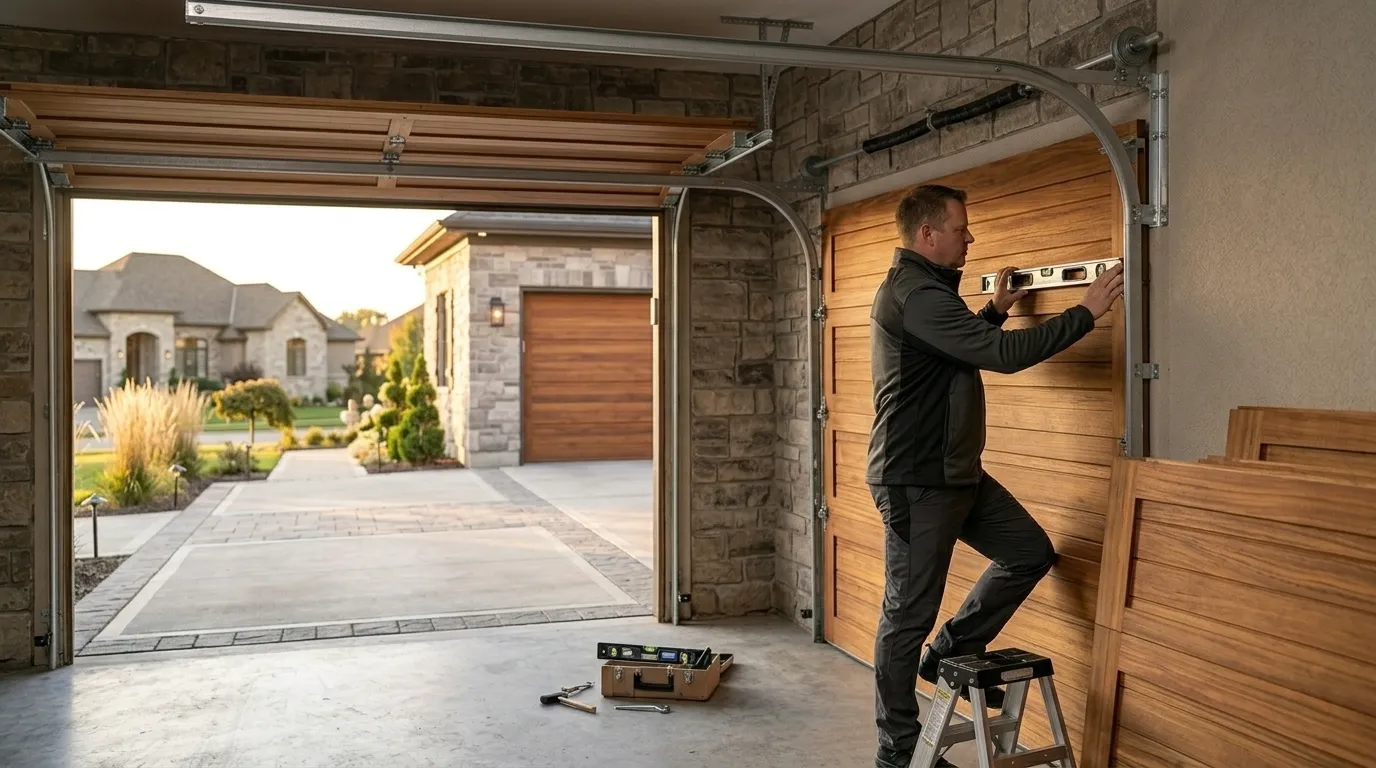
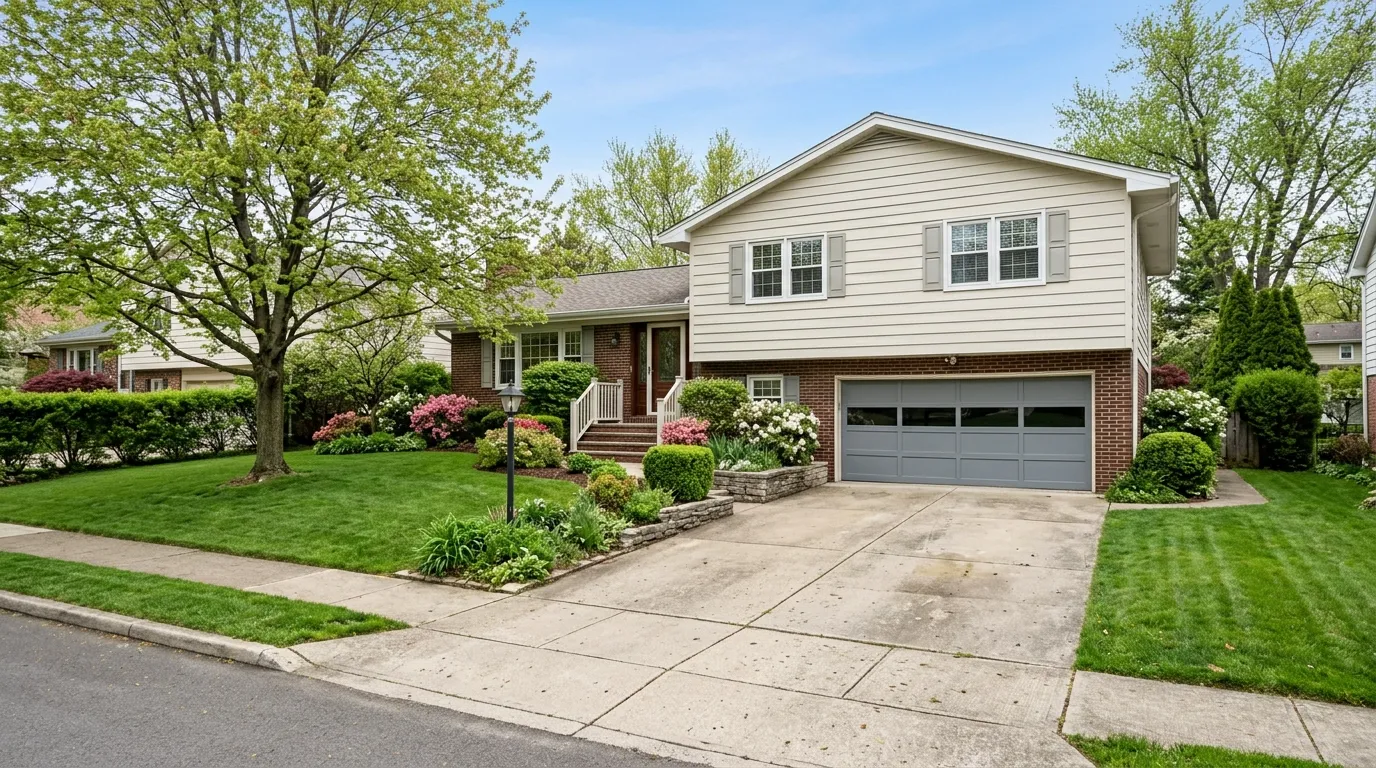
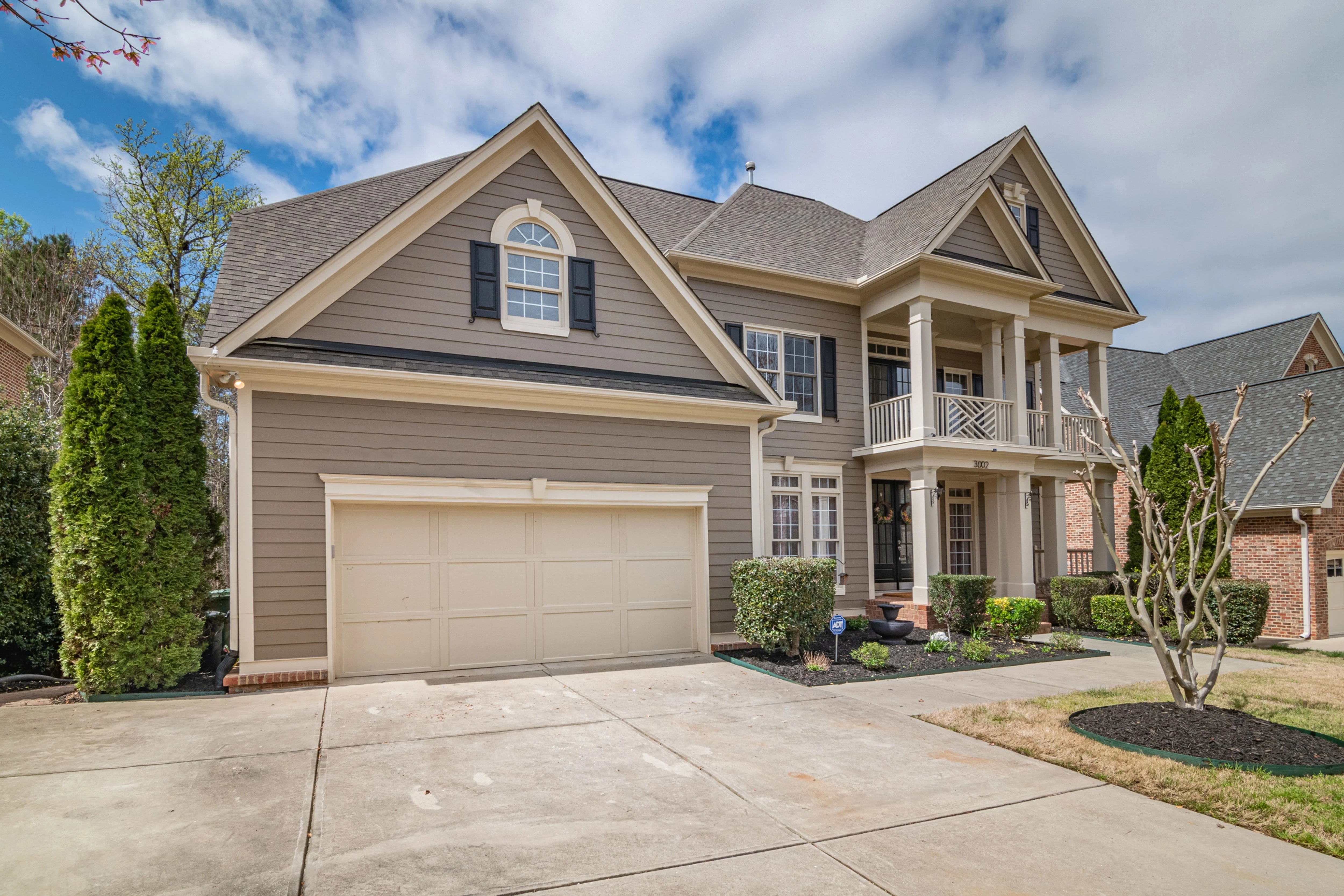
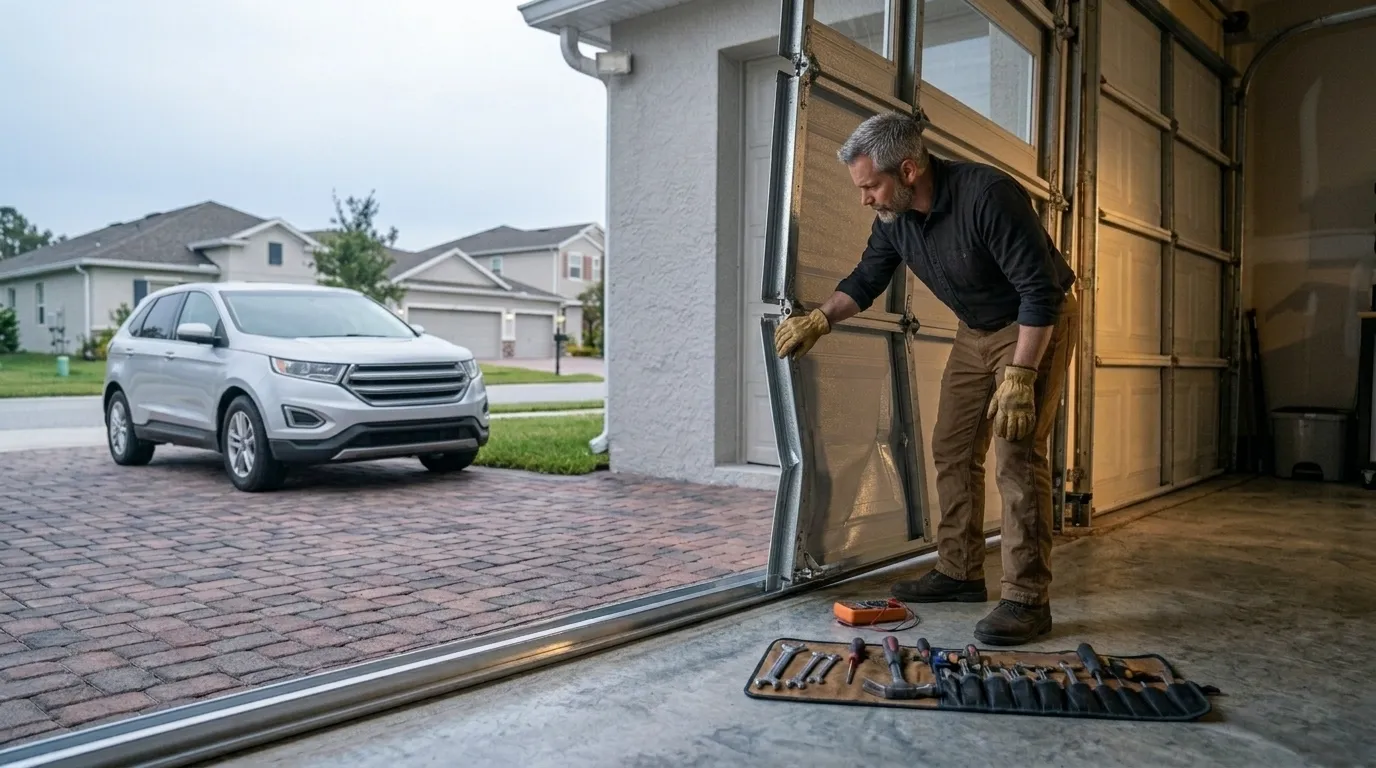
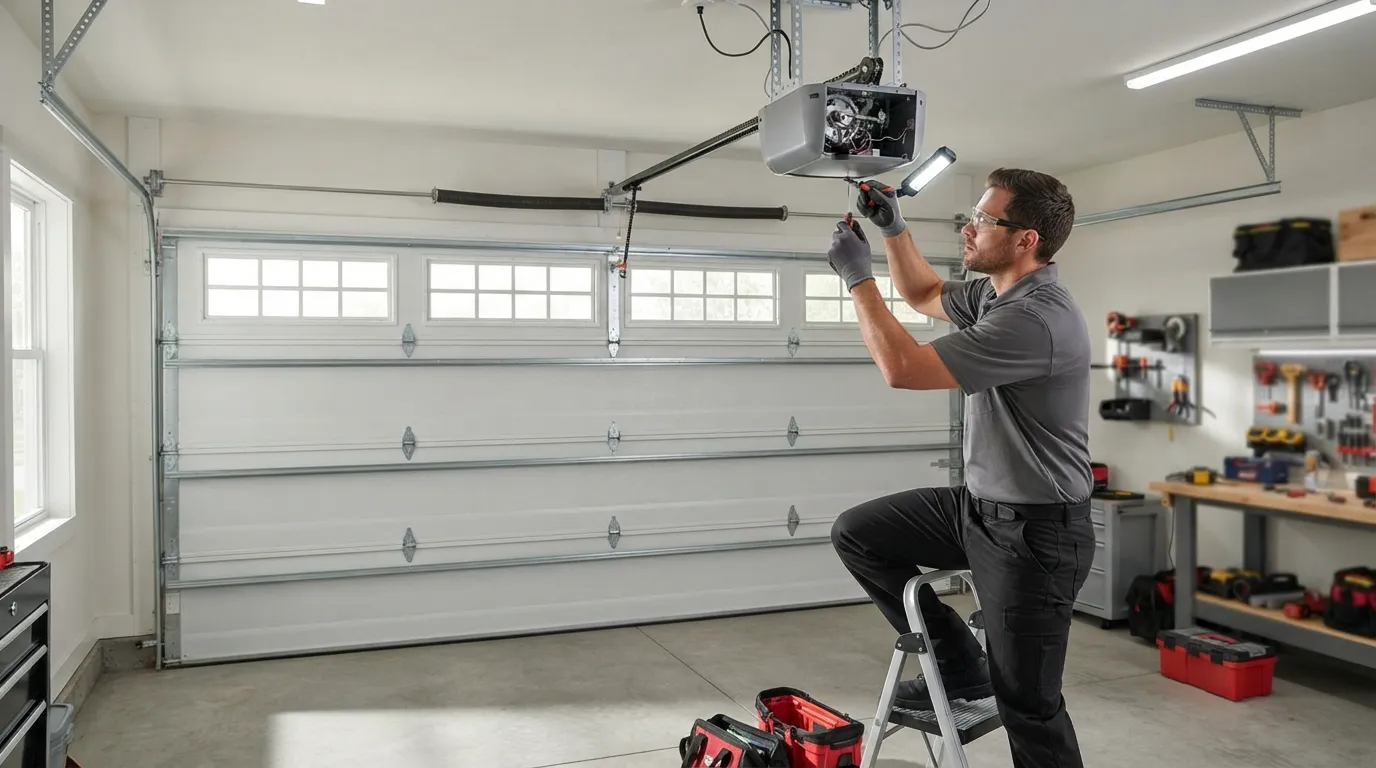
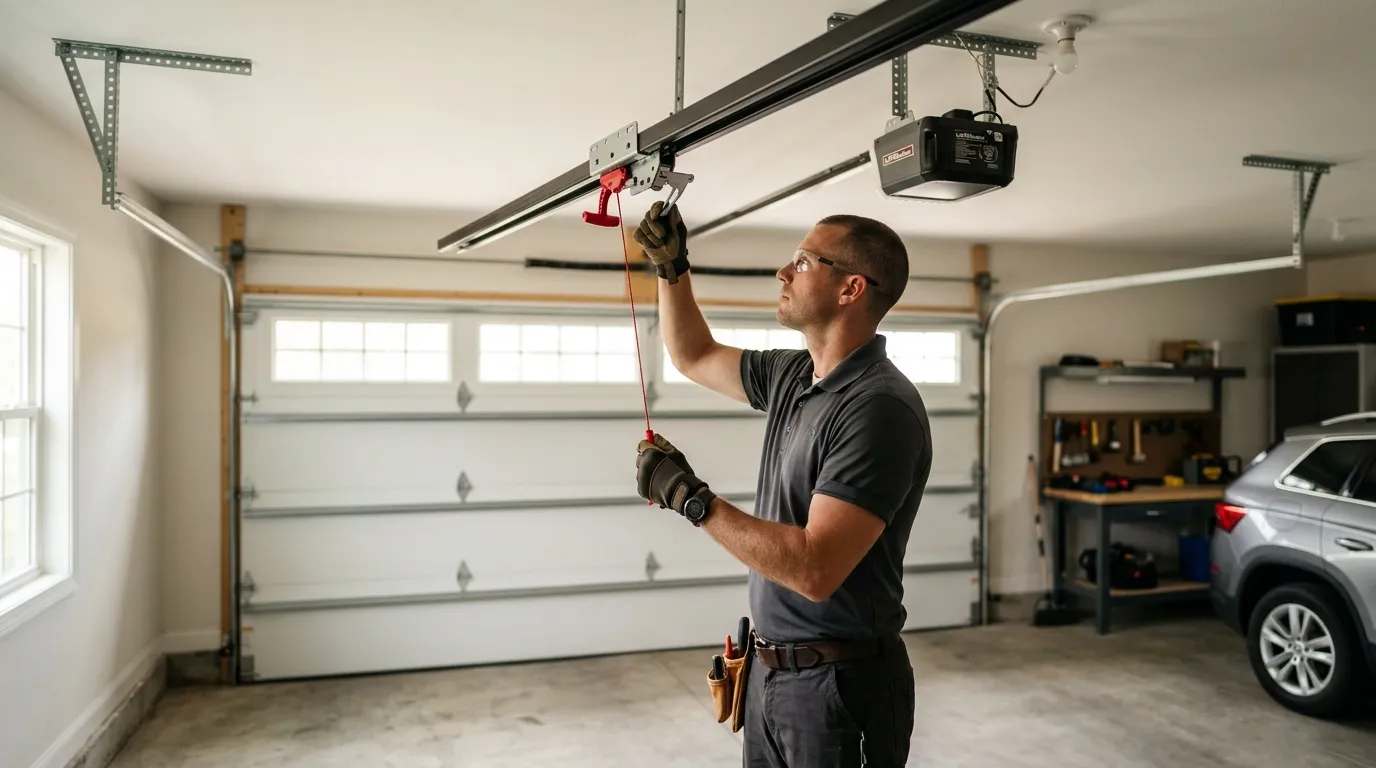
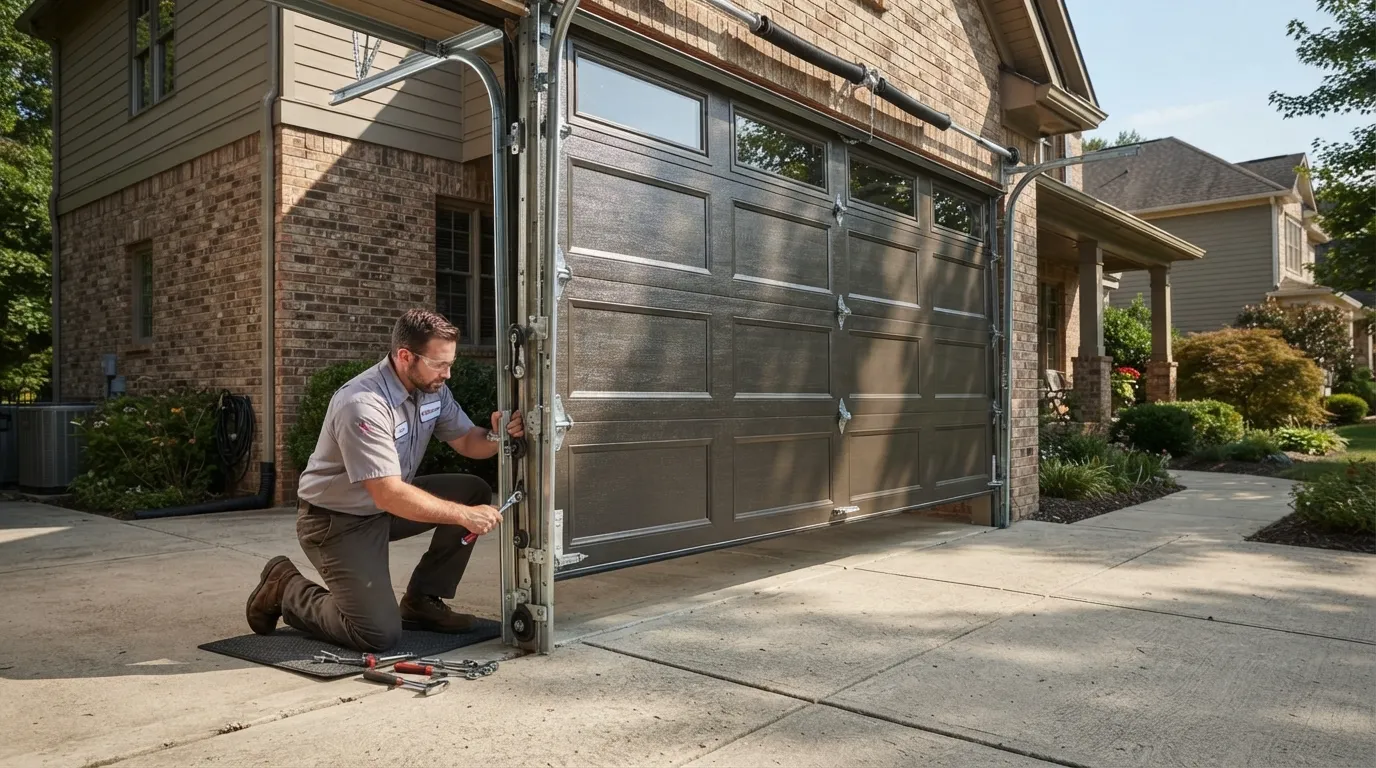
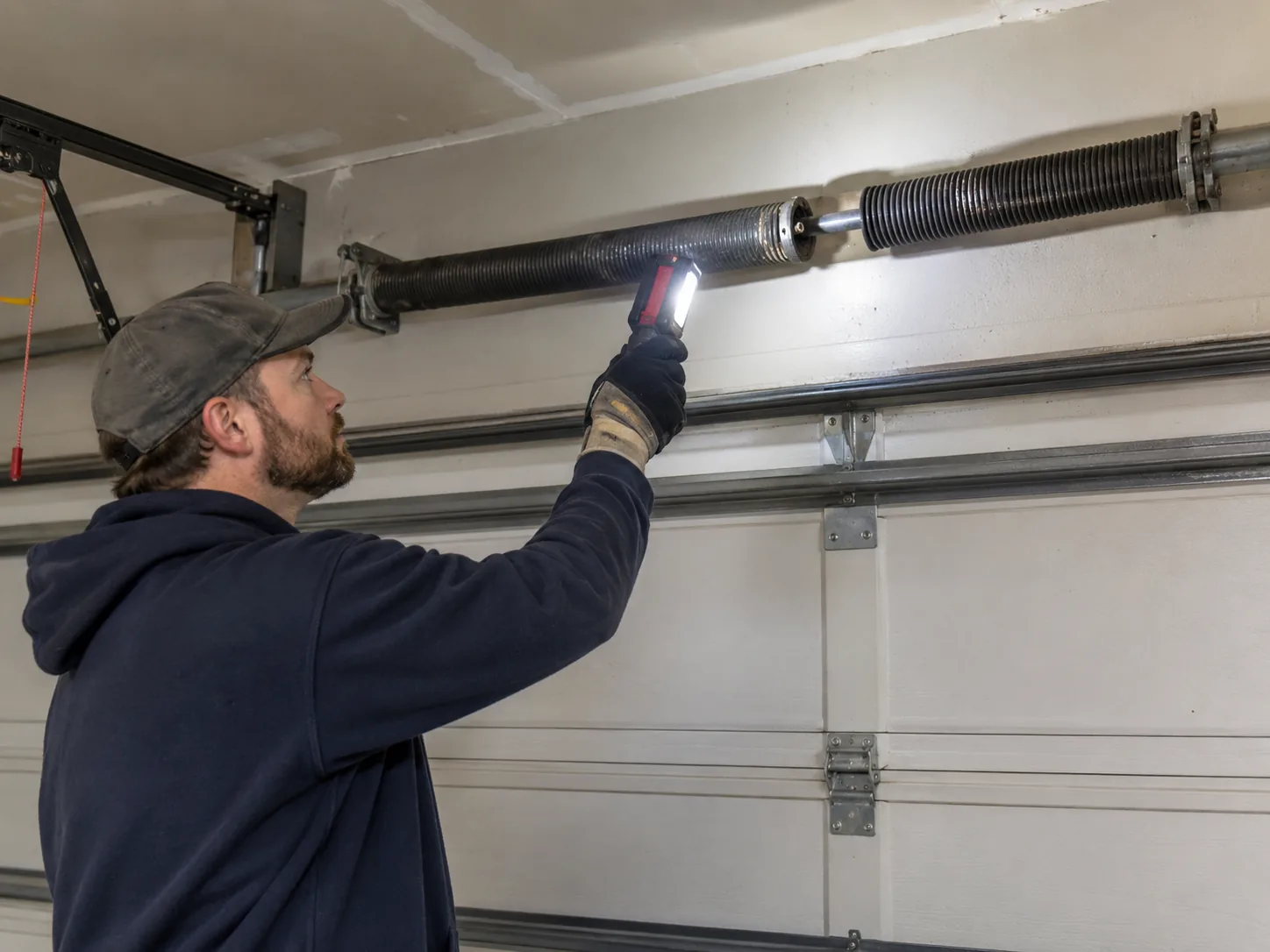
On a door this old, the failure points are predictable. Torsion springs from the early '90s are usually the single-spring setup builders used to keep costs down, and they were never rated for the heavier insulated doors homeowners want now - so if you're upgrading the door, the old spring and shaft won't carry the new weight anyway. Track alignment drifts over three decades of settling, especially on a slab that's shifted even a little. Openers from that era are chain-drive units with no rolling code security and no battery backup, which means a power blip locks the door wherever it stopped. None of that is a same-part fix. It's the reason a straight swap - new door, same track, same spring, same opener - often costs more in labor than it saves, because half the hardware behind the door has to come out regardless.
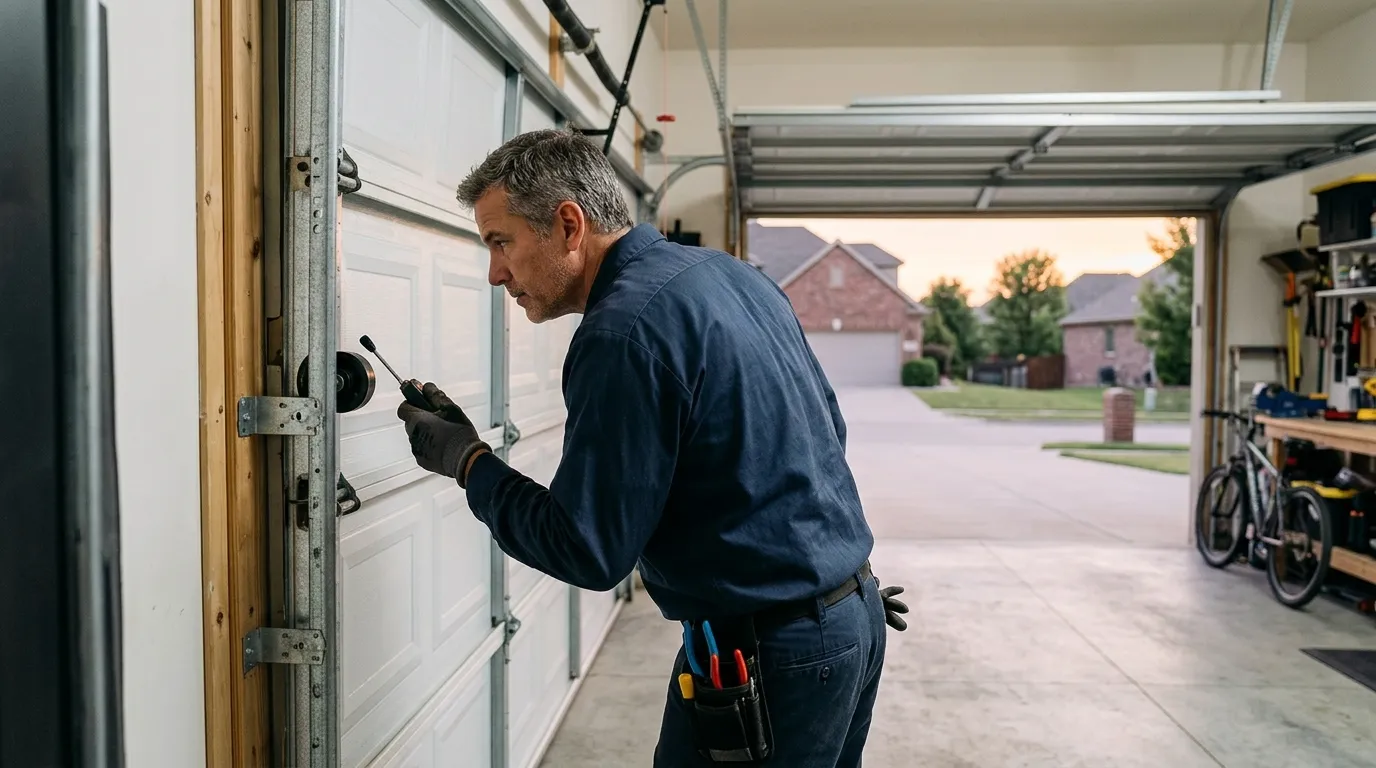
We also see original wood-frame jambs that have swelled or shrunk enough that a new door won't seat square against them without shimming first.